
The 10-Minute Home Strength Workout (For Days That Have Other Ideas)
A ten-minute workout sounds beautifully simple until you look for one.
Suddenly you need a resistance band, three pairs of dumbbells, a yoga block and a woman called Kayleigh shouting “LET’S GO, LADIES!” from a beach.
Kayleigh has never had to pause a squat to explain that the dishwasher does not empty itself through the power of positive thinking.
So here is a 10-minute home strength workout for beginners, or for getting started again. Four straightforward exercises. No jumping. No getting down on the floor and negotiating your way back up.
You will need a sturdy chair, a wall and a couple of light weights or securely closed water bottles. The motivational beach is optional.
First, a small but important detail: ten minutes means ten minutes
The warm-up is included. So are the rests. This is not one of those “quick workouts” that quietly requires another twenty minutes and a change of postcode.
FREE AUDIOBOOK + PDF
GET THE BOOK.
KEEP THE SUPPORT.
Get the complete The Busy Girl’s HOT Body Plan audiobook and PDF free — plus my regular emails with practical fitness, food and mindset help for fitting this stuff around an actual life.
No wellness waffle. No diet nonsense. Unsubscribe whenever you like.

It is a short introductory session, not a complete strength programme for every muscle in your body. If you already train regularly, keep following your suitable programme; this gentle starting version may be too easy for you.
Read the movements and put your chair and weights in position before starting. Trying to learn an exercise while the timer shouts at you is a poor arrangement for everybody involved.
Before you begin: if you have not exercised for some time, have a health condition or injury, or are unsure what is suitable, speak to a healthcare professional first. Follow any individual exercise advice you already have. Stop if you feel pain or become unwell.
You can take longer to warm up or rest. If you need to stop at ten minutes, leave out a later exercise instead of rushing. The timer has no professional qualifications.
Minutes 0–6: persuade your body that we are doing this
Use comfortable, easy movements. You should be warming up, not auditioning for the opening number of Strictly.
- Minutes 0–3: walk or march gently, beginning slowly and gradually letting your arms move with you.
- Minute 3–4: alternate gentle heel taps in front of you, keeping the supporting knee soft.
- Minute 4–5: keep moving gently and add relaxed shoulder rolls.
- Minute 5–6: try small, comfortable knee bends, holding your chair for support if helpful. Return to easy marching between them.
If you still feel stiff or cold, give yourself longer. The NHS warm-up guide also allows for extending the warm-up when needed.
Minute 6–7: chair sit-to-stand
A squat with a destination. Reassuringly, the destination is a chair.
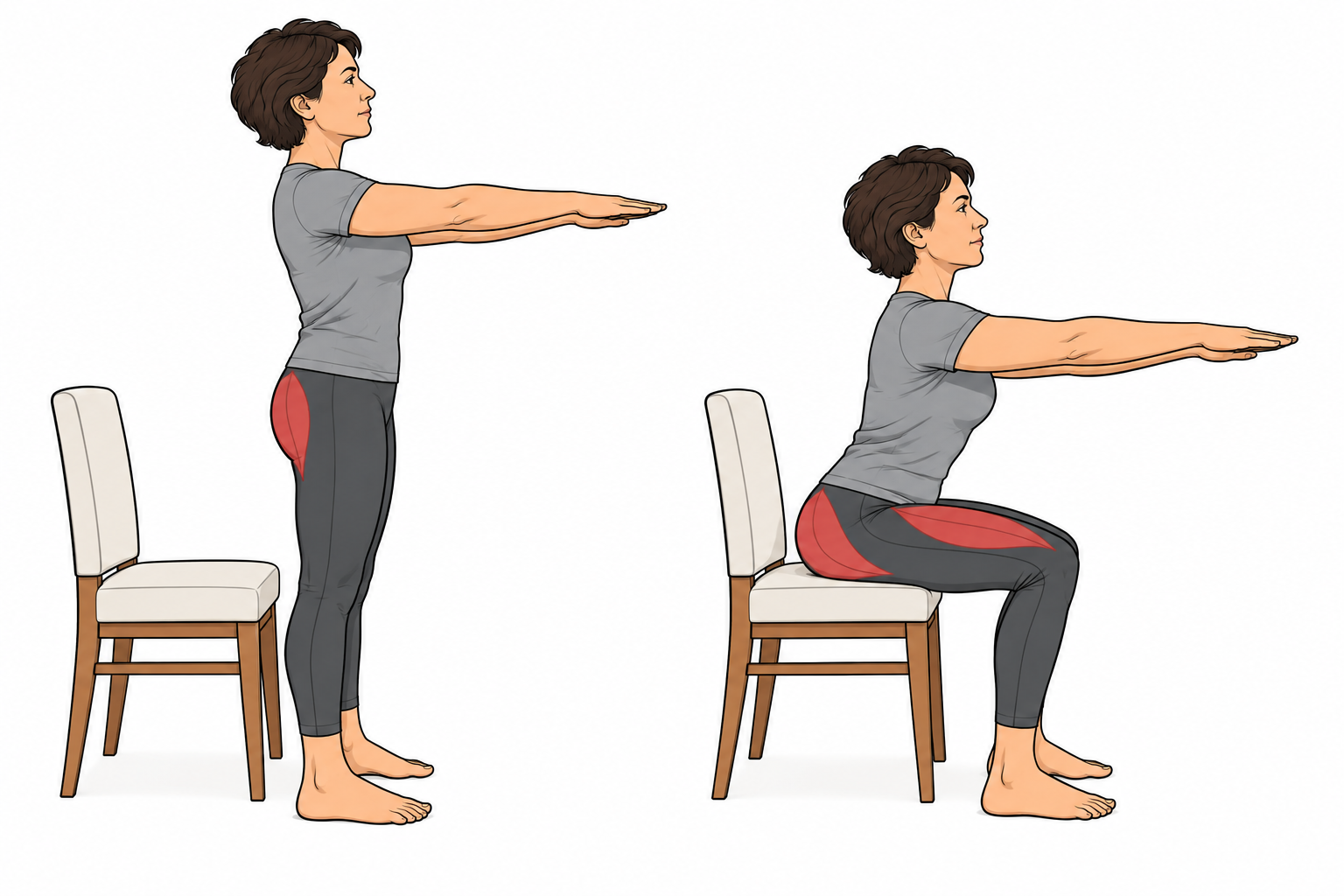
- Use a firm, non-wheeled chair that will not slide. Sit with both feet flat, roughly hip-width apart.
- Lean forwards slightly, stand, then lower yourself back to the seat under control. Keep your knees following the direction of your toes.
- Easier: use your hands for help, or a suitable higher seat.
Do up to five comfortable repetitions, then rest. Avoid the final descent becoming a controlled demolition.
Minute 7–8: wall press-up
Your wall has been standing there contributing very little to your fitness. Time it pulled its weight.
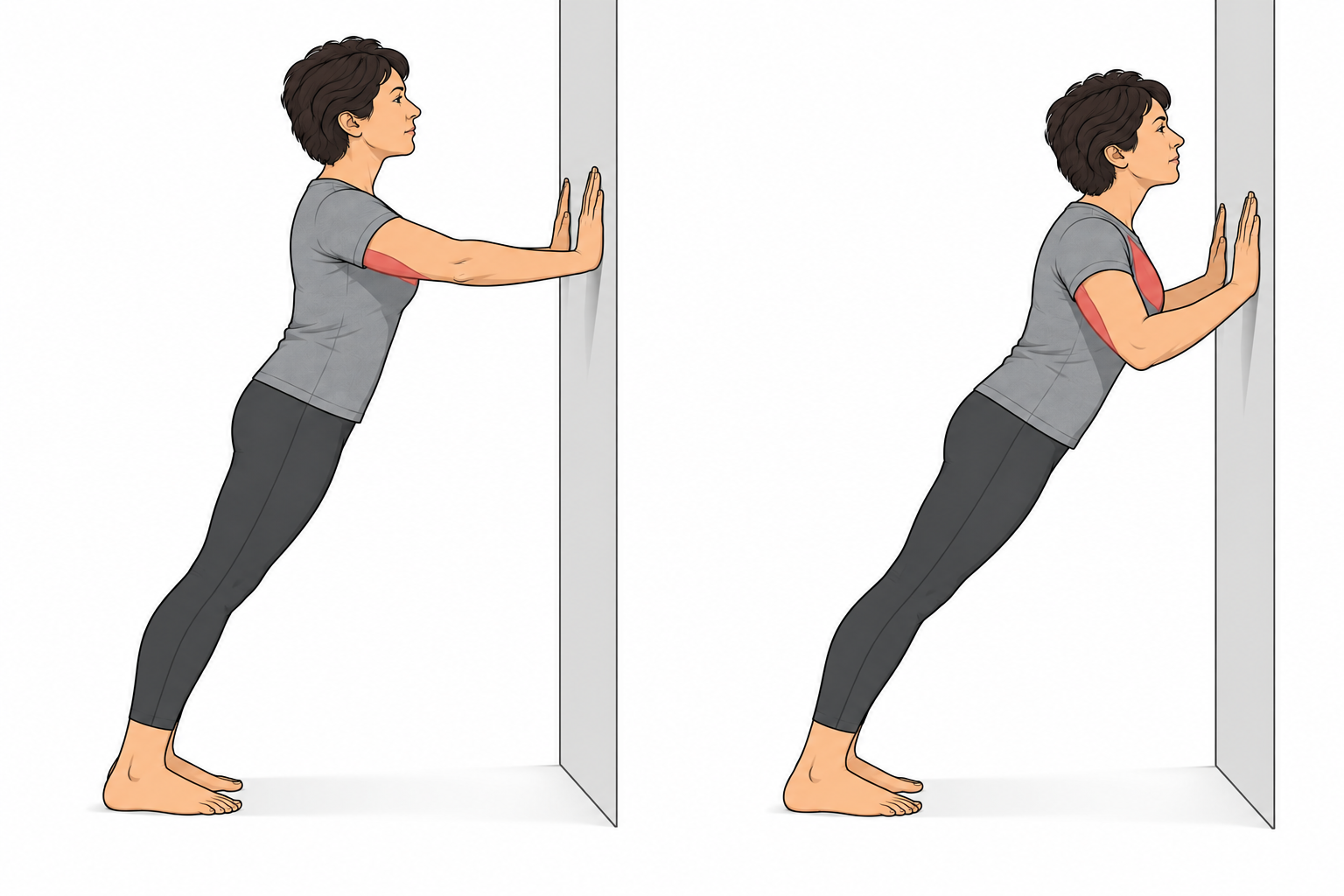
- Face the wall with hands at chest height, about shoulder-width apart. Begin around an arm’s length away.
- Bend your elbows to bring your body towards the wall, then press away. Keep your body moving together.
- Easier: stand closer and use a smaller, comfortable bend.
Aim for up to five smooth repetitions. Breathe out as you press away. Keep breathing throughout; this is a press-up, not an underwater escape challenge.
Minute 8–9: supported calf raise
The movement is small. Your calves are allowed to have quite strong opinions about that.
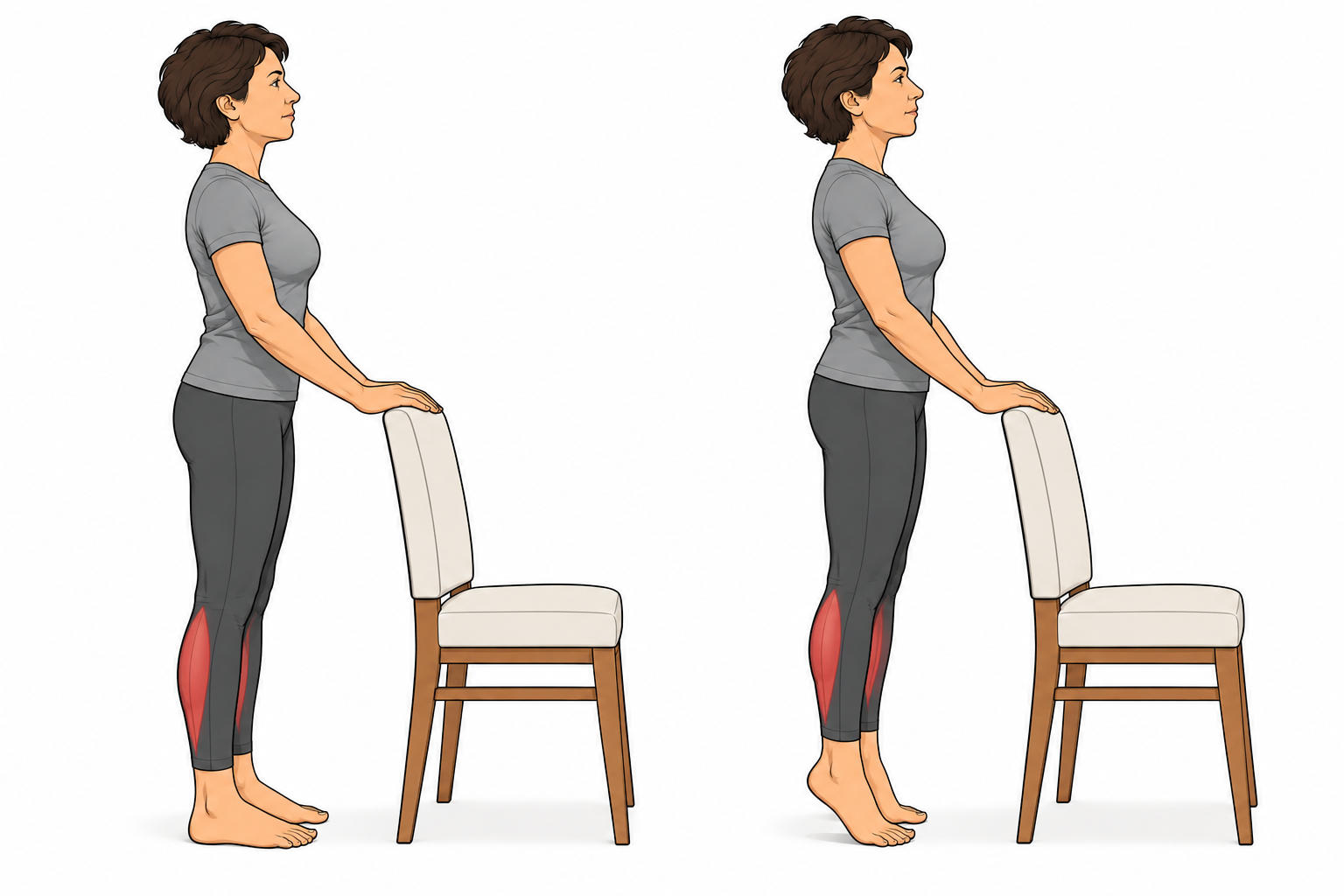
- Hold a stable support with both feet on the floor.
- Lift your heels slowly, then lower them gently. Keep the movement comfortable and controlled.
- Easier: make the lift smaller and keep your support.
Try up to five repetitions, then rest. No bouncing. We are training your calves, not checking whether the kitchen has suspension.
Minute 9–10: seated biceps curl
Sit down. Yes, deliberately. This particular bit of sitting comes with a job.
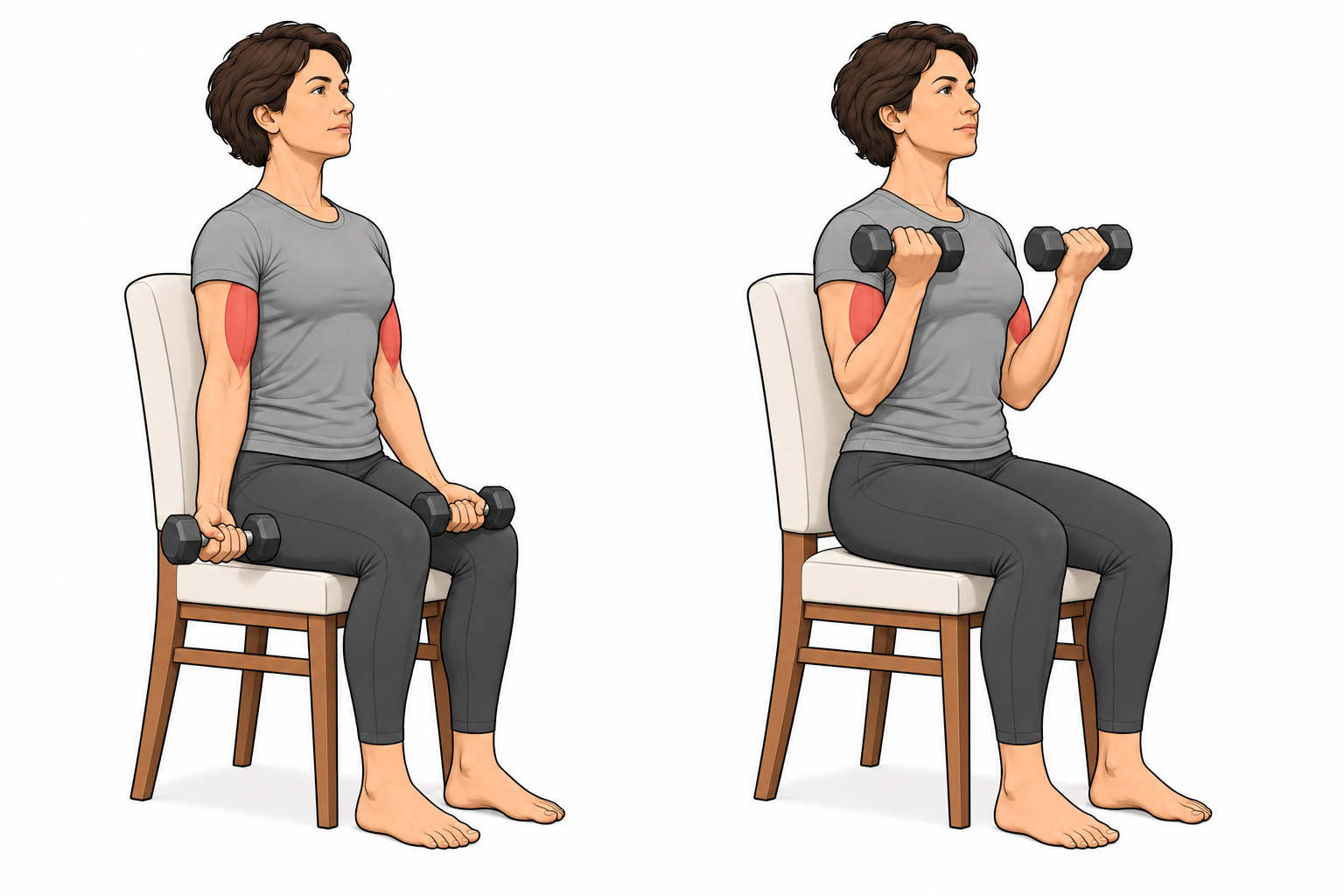
- Sit upright, feet supported, holding light weights or bottles at your sides with palms facing forwards. Keep your wrists straight.
- Keep your upper arms close to your body as you curl the weights up, then lower slowly. Breathe out on the lift and in as you lower.
- Easier: use lighter weights. You should be able to move without swinging, shrugging or leaning backwards.
Start with up to five repetitions, then put the weights down carefully and rest. If your entire torso has joined the curl, the weight is currently winning.
How hard should it feel?
For your first attempt, choose versions you can control comfortably. Finish each set feeling you could manage another two good repetitions. You are finding a starting point, not providing evidence for a documentary about human endurance.
As you become familiar with the movements, the later repetitions should involve some effort. If you could happily do another thirty, you have probably found the warm-up version.
Pain, dizziness or feeling unwell are reasons to stop, not measures of commitment. When you finish, take your time standing or moving away; keep walking gently if you need a longer wind-down.
Make it a little harder. Resist the urge to make it ridiculous.
Repeat the same version for a few sessions so you have something to compare. Note the repetitions, the weight or variation, and how it felt.
When an exercise is consistently comfortable and controlled, change one thing next time:
- Add one repetition, building gradually towards eight if that still leaves at least 20 seconds of your minute for rest and moving on.
- For curls, use a slightly heavier pair of weights and return to fewer repetitions.
- For wall press-ups, move your feet a small distance farther from the wall, provided you can keep good control.
Do not increase the repetitions, the weight and the difficulty on the same day. Your muscles do not need a surprise team-building exercise.
If you need longer rests, take them. If ten minutes is all you have, do fewer exercises. If you want to do another round after the warm-up, allow 14 minutes in total, including the same rests. Extra warm-up or recovery time makes it longer again.
Where this fits in your week
Try two suitable, non-consecutive days to begin with—Tuesday and Friday, for example. Put the chair and weights ready beforehand and attach the session to something that actually happens.
“After I close my laptop” has a fighting chance. “When the house is quiet” may require the children to leave home.
This short routine gives you a starting practice for your legs and upper body. Over time, your wider strength training should cover all the major muscle groups, including your back, hips and trunk. The general adult activity guidelines also include aerobic activity; this little session is one part of the picture.
On a day when you need gentler movement and a mental breather, try The 10-Minute Reset. That has a different job. You do not have to turn every spare moment into a strength session.
Your job now: book the first ten minutes
Choose your next slot. Put what you need in one place. Read the four movements.
Then do the version that suits where you are today. Note what you managed and which exercise needs adjusting.
You do not need to finish as a new person. You need enough information to make the next session a little easier to start.
The dishwasher, regrettably, remains a separate training programme.
Exercise references and suitability
This is an introductory coaching format, not an individual assessment. Technique references: NHS home strength exercises and American Council on Exercise: seated biceps curl. The warm-up is informed by the NHS guide linked above. Adjust the exercises and time to your circumstances and existing professional advice.